
Emily Lyall: REREKĒ.

Different, Unusual, Abnormal, Changed.
INTERVIEW / TE AO MĀORI | ISSUE SEVEN | MATARIKI
A kōrero with Emily Lyall (she/her) @teaoemily on her programme Rerekē as the 2026 Artspace Aotearoa curatorial intern. Interviewed by Skye Lunson-Storey (they/them) | Arts, Culture, Te Ao Māori Editor

The concept of Rerekē encourages artists to be "bold, weird, and different." Expanding on three toi Māori categories, what does being rerekē mean to you personally, and how has that idea shaped the programme?
So, within the three toi Māori categories toi tūturu, toi whakawhiti, and toi rerekē; I’ve taken rerekē as a category in that it speaks to Māori art and mostly modern contemporary Māori art. Holding new ways of thinking around what is Māori art. But the word itself translates to “weird, odd, and different”. That's what I want this programme to celebrate. It’s a personal thing as well. In the last year of my bachelor’s degree, my piece was heavily inspired by being a weirdo. At the time, I really loved Frida Kahlo and her famous quote basically saying I’m a weirdo, and I know there are other weirdos out there; I hope they see my art and know they’re not alone. I’ve carried that thought into this programme. It’s about encouraging new ideas, trying new things, pushing boundaries, and giving space to fail.
Your curatorial practice is grounded in an Indigenous lens and informed by your studies in Māori Visual Arts and Museum and Heritage Practice. How do these perspectives influence the way you think about exhibitions, wānanga, and creating spaces for art?
Through my studies at Toioho ki Apiti, as it was a very ao Māori-centred degree with all of our learning and outcomes. I was talking the other day about how we hardly wrote essays. But then I realised that we were actually giving quite long presentations, which other degrees don't do. I see now that it actually was an equivalent because speaking is a more traditionally Māori thing. It’s good to know enough about a subject that you can talk about it in front of people. That degree gives the perspective of an artist and the ao Māori view. My master’s really strengthened the theory behind it. There's lots of theory, and I found it’s kind of weird to study Indigenous practices. They happen every day without the need for scholars. In my approach, I feel inspired to pull apart what curation and this art world are. To reinstate the knowledge we already have. Curation happens every day in communities. All this amazing art and work is being done, but it's just not in a way that aligns with the art world as a business. So, it’s recognising those as real forms of curation.
You’ve spoken about the pressures ringatoi Māori can face from institutional, Pākehā, and Māori expectations. How does Rerekē create space for artists to experiment, take risks, and challenge established boundaries?
I’m pushing myself also in this; to do the other thing. Not the first that comes to mind. I want that to translate into the artists that I'm working with. I hope they see that I’m also doing the same thing and know that they can give it a go. All the artists I’m working with have amazing practices, but I often say to them, “If there's anything new you’ve been thinking of trying, I want you to give it a go here”. It’s a space for allowing people to mess up and know it’s no big deal. Because information travels so quickly, people are really scared of messing up. That can potentially be a barrier to them coming up with something new and doing something really important.
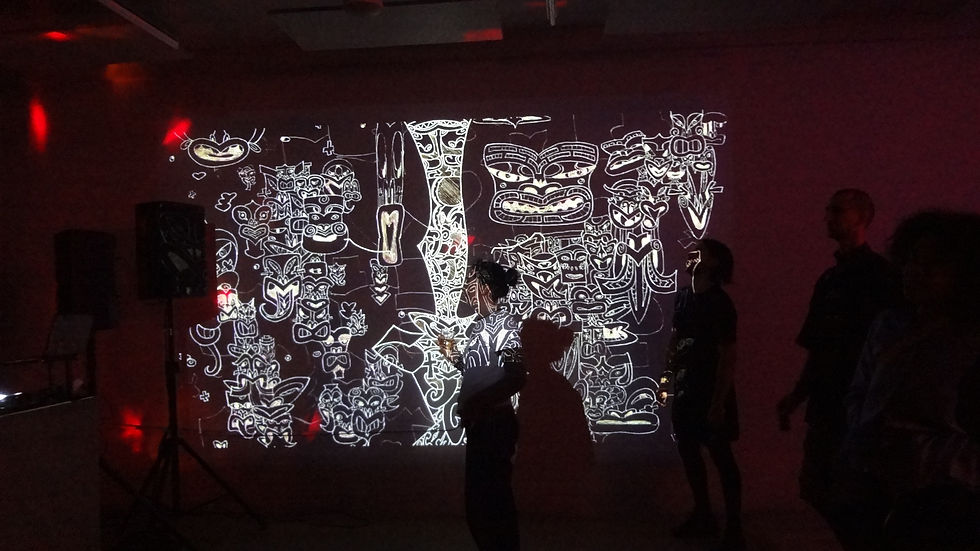
The first activation, Whāriki, focused on collective making and laying a foundation for the programme. Why was collaboration such an important place to begin, and what have you learned from bringing artists together in this way?
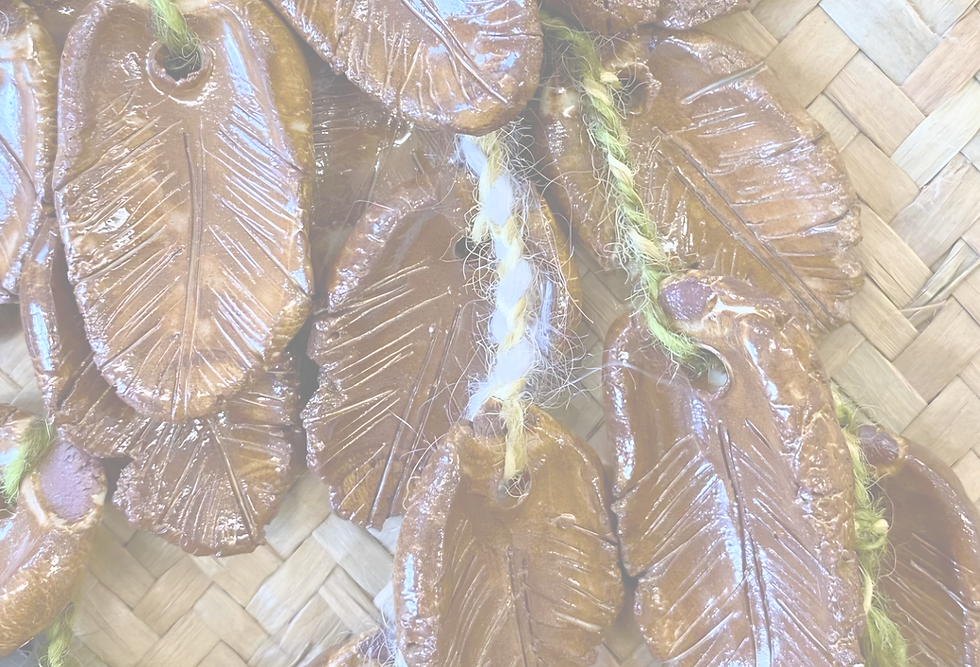
Collaboration is tino in te ao Māori, but also in normal, everyday life that maybe isn't practised in society. So, it's about bringing back those practices that we know work and that we know are beneficial. Something as simple as that is really important. A big thing I wanted from bringing people together actually was to get some feedback on how people feel about the art world in Auckland at the moment. At the time, I’d only been here for a month, and I wanted to gauge what it was like. To hear from them directly. What do they hear and what do they notice? I learned a lot from that and from hosting a wānanga. As a curator letting them do what they wanted to. What they ended up creating was nothing like what I had imagined. If I had a say in it, I would probably suggest maybe not that, but I really liked seeing what they came up with. It’s a cool piece that’s very fitting to the programme. This was me learning about being a curator.
As Matariki is a time for reflection and looking ahead, being the 2026 Artspace Aotearoa curatorial intern, what hopes or aspirations do you have for Rerekē and the communities it brings together over the coming year?
I’m just keen for young people to get in amongst the galleries and the arts. We are the people coming through the art world; we’re the next to decide what happens and what we make it. The whole programme is a big conversation that we’re all a part of and get to have a say in. It’d be cool to look back on it and see where some of these conversations began. The funding given by Creative NZ for this internship is for a three-year period. Jing had it last year, I’ve got it now, and someone will get it next year. But I find it so sad that it’s finite. Being in this role is so important, and not only Artspace but more institutions need stuff like this. These are really important opportunities.
Lastly, for rangatahi and emerging artists who might feel constrained by expectations or unsure where they fit, what advice would you give about embracing their own version of rerekē?
This will be more of a personal opinion rather than about the programme. But I was a weirdo as a kid, and so were all my art baddie friends. We were all really weird and bullied. Now we’re kinda cool, and the others are kinda lame. So, I would say, don't dilute yourself. On some inspirational bs, the things that make you weird are the things that make you unique. It’s true. The weird ideas and the weird ways you see things are what set you apart from others. Tap into it, because I think that's extremely valuable.


Interesting interview with Emily Lyall. I enjoyed the personal perspective and the way she talks about her creative work. It also reminded me of how different forms of creativity can inspire seasonal looks like a halloween ghostface costume.
One thing I like about this name generator is that it generates names quickly without requiring any signup. Simple and practical.