
When a Terrific Folktale Terrifies a Fragile Soul
FEATURE | ISSUE THIRTEEN | SPOOKY
Written by Ha Minh (Niki) (she/her) | @_haniki_ | Contributing Writer
Once upon a time…
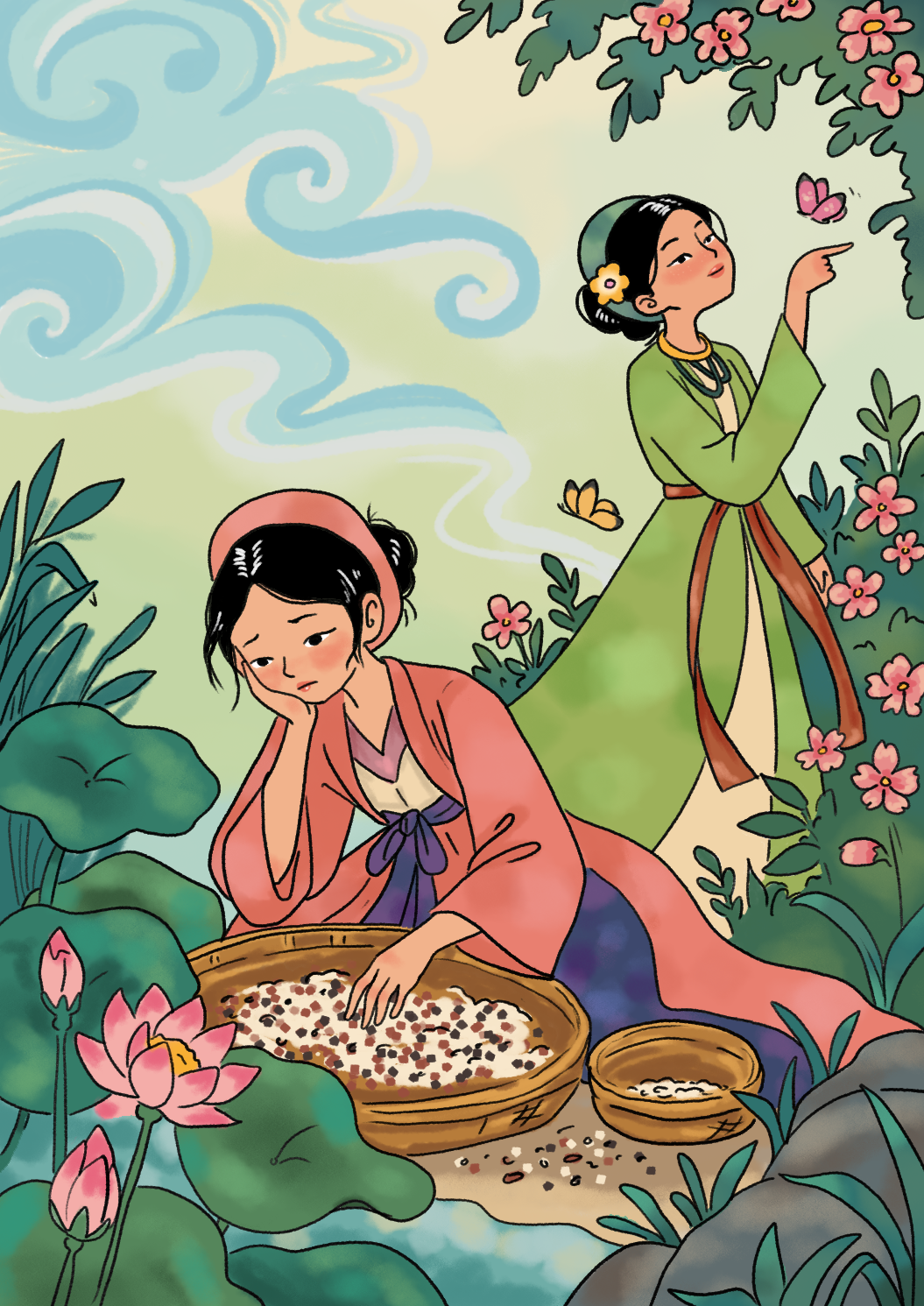
I grew up believing in the currency of tears. Like many generations of Vietnamese children, I was raised on the folktale of Tấm Cám. The rules of the universe, as I understood them, were incredibly simple: if you were kind, if you worked hard, and if you endured suffering with quiet grace, the universe would eventually offer you good things as gifts. And if things ever got too heavy, what would happen? All Tấm had to do was weep, and Bụt (Buddha) would appear in a cloud of smoke to sort the mixed rice, provide the silk dress, and pave the way to the palace for the first meeting with the king.
I walked into adulthood clutching that promise like a shield. But the deepest fear I have ever experienced wasn’t of failure, or the dark, or the unknown creatures. It was the terrifying, quiet moment I first realised the shield was made of sparkling paper.
I remember the first time I was truly broken by the world – a moment of profound unfairness when I felt I had done everything right and still lost. I cried, expecting the cosmic safety net to catch me. I waited for the smoke to clear and the universe to intervene. Instead, I was met with the most terrifying sound a child coming of age can hear: absolute, indifferent silence. There was no Bụt. The rice and the beans were still mixed, and my hands were the only ones there to sort them.
That crushing silence fell when the illusion of my friendships finally shattered. I was surrounded by people who constantly assured me I was their precious friend, yet I was always the one isolated from the group. We called ourselves friends, but their stories felt like a locked room I didn’t have the key to. We called ourselves friends, but I was the one they whispered about the moment I walked away. Like Tấm, I believed the folktale’s promise: if I just endured it, if I kept caring and twisting myself to satisfy their needs, I would eventually be rewarded with genuine friendships. I didn’t realise how deeply exhausted I was or how thoroughly I had diminished myself in the silent, desperate act of begging for care, for love, for a friendship that I mistakenly thought my quiet suffering would earn.
Driven by a desperate yearning for a vibrant, cinematic youth, I kept believing that my own Bụt would eventually appear to make my high school years memorable. I imagined this fairy god-figure would swoop down to transform my appearance, sweep me away to school dances, and perhaps even introduce me to a handsome boy. So, I waited. I waited, and waited, and waited … Three years passed, and my high school life remained as plain as water. There were no best friends. No parties. No romance. Just an ordinary girl, hopelessly watching her youth slip through her fingers.
My graduation day wasn’t a triumph. It was the day my world, built on the magical dust of that folktale, finally collapsed. I was terrified by the sudden, sharp truth: I had wasted my most precious years twisting myself to satisfy others, standing completely still, and passively waiting for a life I had never actually fought for. Had Tấm Cám really promised us that simply “being nice” meant life would inevitably reward us? We were taught that the only requirements for a great life were to be kind, gentle, and submissive. But as I stood there, I bitterly realised the story had left out the most important part. It never taught us how to be kind without losing ourselves, and it hid the ultimate truth: the only Bụt who could unconditionally change my life was me.
No longer once upon a time…
Years removed from that high school graduation, the fear still occasionally flickers, but it no longer paralyses me. I traded the illusion of the fairy tale for the demanding, deeply rewarding reality of my own agency. When I sit in Auckland, untangling the complex threads of my new academic life or when I ground my mind and body in the disciplined focus of contemporary dance, I know I am not waiting to be rescued. I am no longer that girl watching her life slip through her fingers. I realise now that sorting the mixed rice and beans of adult life is not a punishment to endure. It is the deliberate act of building your own life, grain by grain. Tấm Cám taught me to fear the silence of the universe, but growing up taught me how to fill that silence with my own voice. We may not get a fairy god-figure to wave a wand and grant us a perfect life, but we get something far more powerful: the pen to write our own ending.


Comments