
Rick’s Reel Recommendations | 3 Films on Childhood
COLUMN | ISSUE TWELVE | NOSTALGIA
Written by Ricky Lai (he/him) | @rickthelai on IG & Letterboxd | Columnist
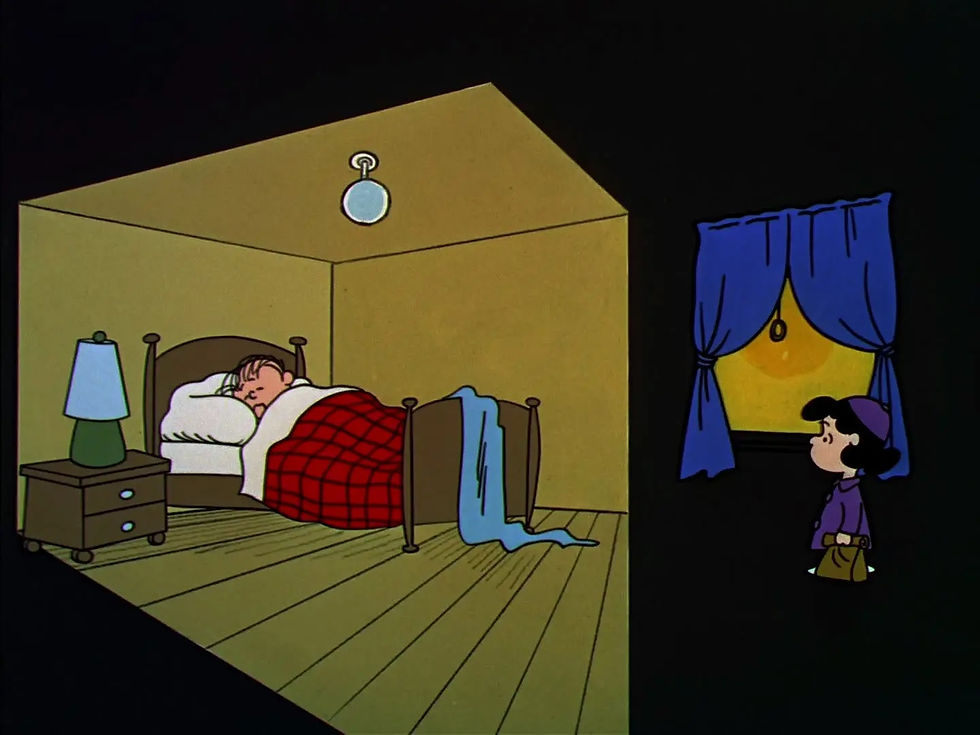
A Boy Named Charlie Brown (Bill Melendez, 1969)
Out of the gate, one must admit this feature – 86 minutes of Charlie Brown, what a dream! – isn’t the peak of Peanuts. It has the mood but not the wit, and in its slight lack of inspiration it even flat-out reprises scenes from the beloved, 25-minute television specials: Snoopy twirling on an icy lake to Guaraldi’s “Skating” (1965’s A Charlie Brown Christmas) or Lucy pulling the football away from Charlie as he’s about to kick it (1966’s It’s the Great Pumpkin, Charlie Brown). My only rejoinder is that, well, those were great vibes then, and they’re still great vibes now; I don’t mind luxuriating in those seasonal routines of Hennepin County. A Boy Named Charlie Brown leans dryly into the banal disappointments (and embarrassments) of Chuck’s adolescence: flying a kite that falls apart in the wind, being the weakest on the baseball team, losing the Annual Spelling Bee in front of a live television audience. And yet the centerpiece of A Boy Named Charlie Brown has nothing to do with Charlie Brown; instead it is when Schroeder plays Beethoven’s ‘Piano Sonata No. 8’ and the film suddenly gets lost in a liquid drift of splashing colours and pulsing lines. Schroeder’s little toy piano suddenly swells into a grand piano that outsizes him in the frame; it almost seems ready to swallow him whole. This sequence, as if right out of Fantasia, is good enough for fifty lifetimes; a kid like Schroeder – reminding me of myself when I was eight – has barely scratched the surface of his own lifespan.
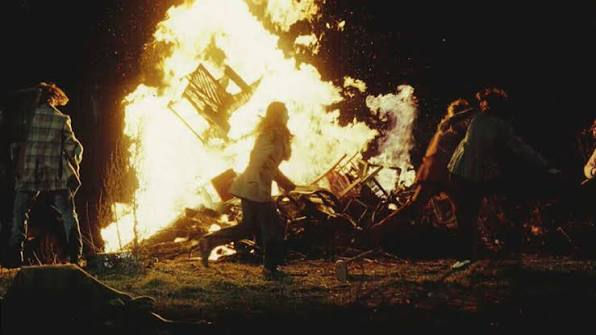
Cold Water (Olivier Assayas, 1994)
If one were to cast judgement based off film alone, fewer childhoods look gloomier than those in France, pre-1968. One would be forgiven for watching Truffaut’s foundational The 400 Blows (1959) and gleaning that a French adolescence largely involves simply getting your ass kicked over and over again. I remember one scene extremely well, when young Antoine is being confronted in the classroom, and his professor steps up to him holding out both his hands.‘Right or left?’ he asks, to which Antoine replies, ‘Left, sir.’ The prof unstraps his watch from his wrist, places it gently on a shelf, then slaps Antoine across the face with his left hand. The deafening crack! echoes in my brain, rippling through all the Francophonic coming-of-age narratives that I’ve seen since: Pialat’s L’Enfance Nue (1968), Charlotte Le Bon’s Falcon Lake (2022), and best of all the debut film from globalist cynic and post-punk nerd Olivier Assayas, Cold Water (1994). In the hope of connecting with his delinquent son, Gilles’ father describes a piece of classical art in a book that moves him deeply. Gilles isn’t listening. The camera slowly trails from the open book on his father’s lap down to the floor, where Gilles traces his footsteps along the edge of the carpet. It’s not that the bored kid can’t connect with art – just not this kind of art, and certainly not at the recommendation of his father. Cold Water instead runs on rock ‘n’ roll from the Americans and Brits right from the opening needle-drop, Roxy Music’s ‘Virginia Plain’ hissing from a radio that Gilles and his brother fight over. These European young ’un crave a life more exciting and cutting-edge out there, although they can’t actually escape. Yet their dream is visceral; the sound of crunchy guitar riffs transmitted from some far away country; somewhere else over 3,700 miles of cold water.

The Vast of Night (Andrew Patterson, 2019)
To keep us tuned into the theme of radio, how’s this? Two nerds bond over their love of the airwaves, and discover that something is coming to Earth that only they are prepared to see. Much like We’re All Going to the World’s Fair, I’ll have to concede that the multitude of characteristics I find blistering and mesmeric about The Vast of Night are also the things that’d read as inert to many others. But this really is an incontestably modern transfiguration of the things that make Carpenter’s The Fog, Spielberg’s Close Encounters, and heck, even Linklater’s Dazed and Confused galvanising to those who know what it’s like to experience a breakdown in communication, or to send a message out to everybody with the uncertainty that anybody, out there, is even listening still. This is a dilemma that by no coincidence is emblematic of 2010’s-onward internet despite the film itself being set in late-’50s New Mexico, just after the launch of Sputnik 1. The conspiracy is laden with impressively long takes, breathtaking tracking shots scanning the town from one end to the other, examining its scale to illuminate the loneliness of those still here. The two protagonists seem so different – one a charismatic talker (‘...Baking biscuits!’), the other only shyly budding in such confidence – until we observe how much internal feeling they actually share in common.


Comments