
Vivid, Livid, Lesbian Linocut

THE HOT LESBIAN | COLUMN | ISSUE SIX | MAHI Ā-RINGA / CRAFT
Written by This Week’s Hot Lesbian, Wren Probett (she/her) @inkdogshirts | @hot_lesbian_initiative | Contributing Lesbian


What could possess someone to wear a shirt that reads “Gay Dog” or “Dyke”? What must go wrong in a person’s life, for them to spend hours carefully carving those words from linoleum? Of all things, why a shirt? I mean, are you planning on wearing that on the bus? At the mall??
If you’ve seen my shirts worn on the back of a friend of a friend of an ex, you’ve likely wondered this question; it’s okay, I do too.
As a tragically adjective-ridden artist (transsexual, autistic, virgo moon to name a few) you can imagine I've had a colourful relationship with both art and queerness. I didn’t have the social identity for traditional jazz nor the colour vision for traditional painting. In truth, tradition has vexed me since I was born, but if no traditional pathway worked for me, what path would?
Enter the wonderful, blood-soaked, hand-cramped world of linocut.

If you’re unaware, linocut is a printmaking method in which a flat plane of linoleum is carved away to reveal a flipped indent of your printed image. This carving is then adorned with ink and pressed onto your printing surface, and voila! You’ve just imagined the process of making a linocut! If you haven’t, there’s a risk you’re experiencing aphantasia because, honestly, I think I did a good job explaining it.
As a seasoned lesbian and trained jazz bassist, the prospect of spending hours meticulously curling and straining my fingers while swearing incessantly and leaving marks isn’t new to me. Though I think it’s a bit on the nose that I’m pressing the literal word “Dyke” on a table in my garage, but I digress.
Linocut allows you to adorn and upcycle old crop tops and flared jeans into entirely personal works of wearable art. Want to make shirts for your roller derby team? Linocut. Tattoo your 3-month situationship somewhere it isn’t permanent? Linocut. Want to signal to cute strangers that you’re queer? (good lord) LINOCUT!
Scissors, carabiners, monstera leaves, lavender, labrys, double venus, minimalist lineart of oral sex; you name it, and I promise you I’ve seen it printed with linocut. Like any expression of queerness, though, we run into the inevitable fear of visibility. What if the wrong person sees me? Am I okay being invisible to danger, if it means being invisible to my community too?
By virtue of being born with a fundamentally queer body, facing the slings and arrows of hate speech and lecherous creeps never came with the illusion of choice; I couldn’t present straight or cis enough to avoid it. Still, it crops up in the mild tradeoffs we make for our peace of mind. When we hide our tattoos, grow out our hair, it feels like self-preservation and self- betrayal woven together.
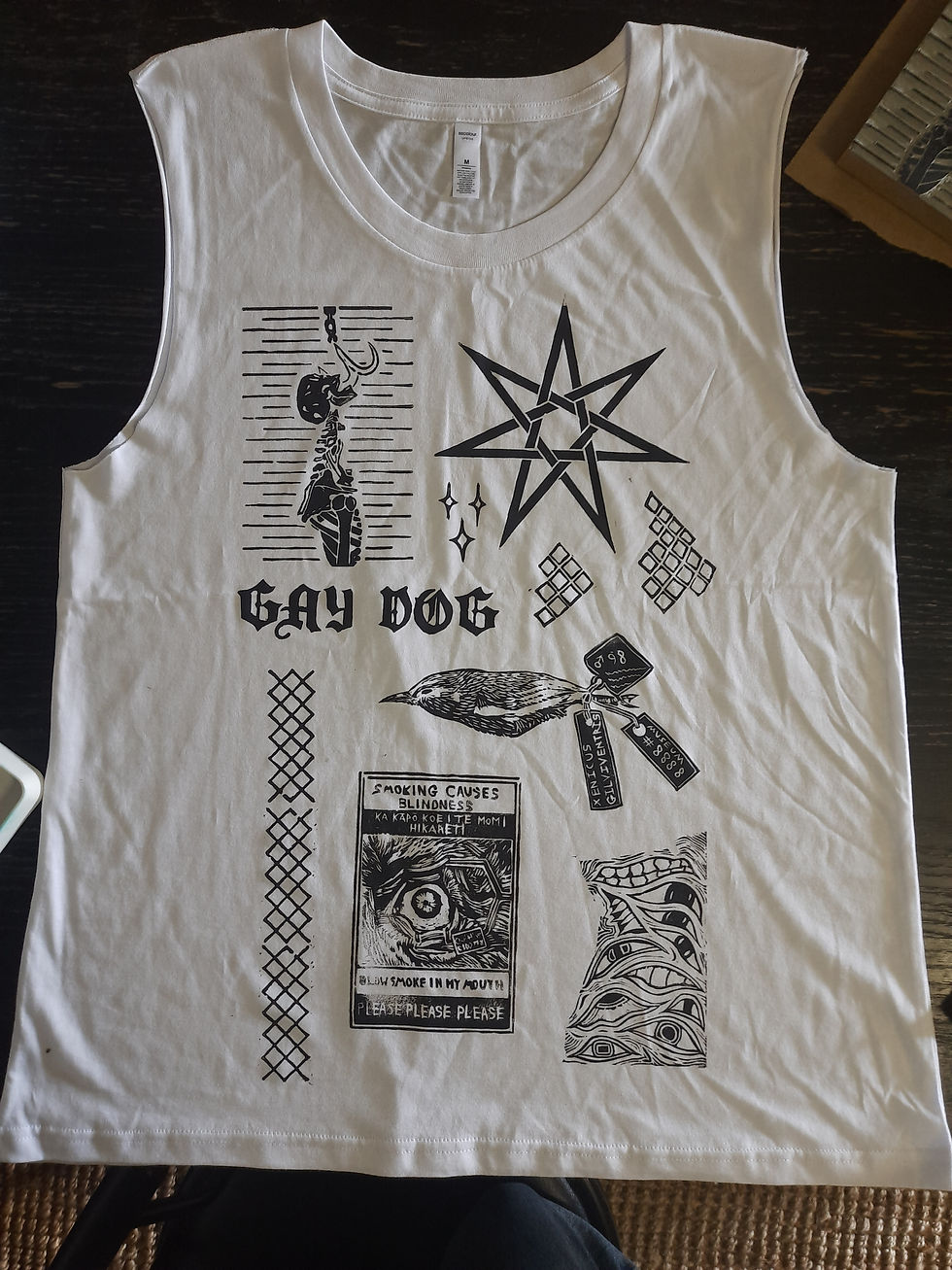
I think once you’re pushed into a state of permanent visibility, where conformity is no longer an option, you’re forced to rebel, to become ultravisible. When the balancing act between danger and discretion buckles beneath you, embrace the fall.
Thinking back to the infamous Lavender Menace protest shirts from 1970, why not be daring with your expression? Why not be a beacon of pride? Why not be so unashamedly yourself that you become poison to the virus knocking on your doorstep?


This made me think about how much care goes into wearable art — hours of carving just to say something loud with your body. I love that energy. I've been experimenting with turning written pieces like this into audio, using an AI audio generator to build full sound scenes from a single prompt, and it's wild how a voice can carry that same defiant tone. The linocut shirts and spoken-word audio both feel like ways of refusing to be quiet. text to speech
Excellent article! An instagram reel downloader has been a great addition to my daily routine because it helps me save valuable reels quickly while keeping everything organized in one place.
Your reflection on queer identity and artistic rebellion is powerful, especially in how it challenges tradition and embraces alternative creative paths. It also reminds me of a modern erotic memoir for women that explores identity, embodiment, and self-expression through unapologetic storytelling and visual imagination. Your linocut perspective feels like part of that evolving cultural narrative that reshapes queer artistic expression today.
Reading this post raises questions about expression and public perception. Clothing and language often reflect identity, culture, and resistance, even when misunderstood. In contrast, a children’s picture book about family love can offer a gentle way to teach acceptance, kindness, and belonging. Context matters, and conversations should encourage understanding rather than judgment of personal expression choices in everyday life today.