
Kōrero Toi: ‘Uhila Nai
- ‘Uhila M.L Jr
- May 18
- 2 min read
Tohi Kumi Koloa
KŌRERO TOI | ISSUE SIX | MAHI Ā-RINGA / CRAFT
Written by ‘Uhila M.L Jr (she/ her) | @uhila_nai | Contributing Writer

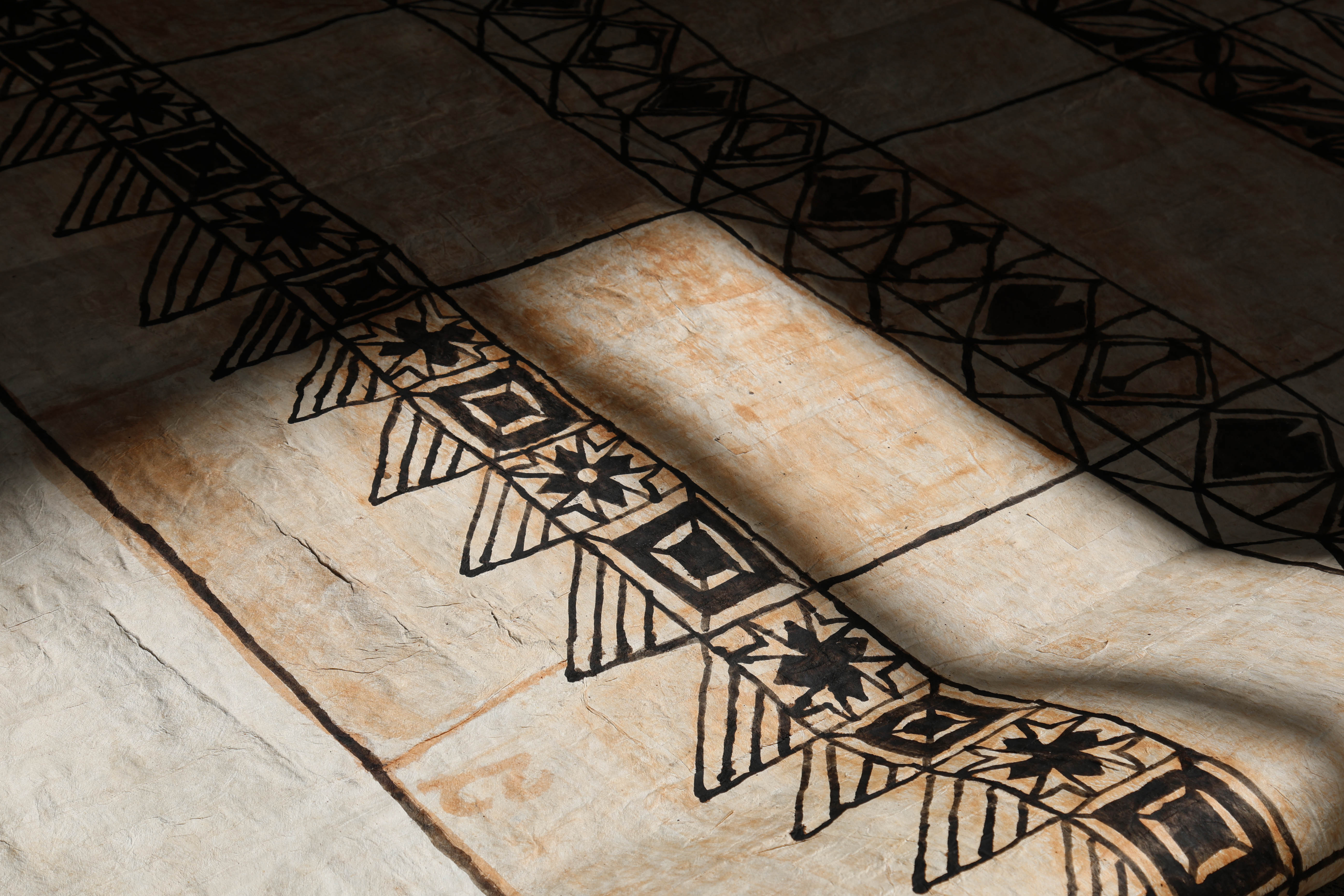
The project Tohi Kumi Koloa, delves into the Tongan practices of ngatu barkcloth and kupesi embroidered relief stencil, as a lived document of my ancestors. The work is grounded in the Tongan way of thinking, making, and doing, while adapting to the present day. A practice that exists within and across the past, Tonga, and the present, Aotearoa New Zealand, as seen in the movement between people, land, and materials.
Central to this research is a personal collection of kupesi inherited from my nena (grandmother), ‘Ana Va‘inga Nai, created by her and the hou‘eiki fafine (elder women) from their kautaha, association. As such, I ask: As a maker, how can I tauhi (take care of) all the tukufakaholo (knowledges and practices handed down) my nena left with me?

Tohi Kumi Koloa wants to honour the labour, creativity, and persistence of our ancestors.‘We’ want to continue this rich practice left in their hands by their grandmothers, aunties, mothers, and the elders, and now in ours. Kupesi is a unique object made entirely from the material of fonua (land) to carry and embody the richness of Tongan history, allowing each village to write the stories they want to pass on for generations. Sometimes this is a story that only the maker and the villagers understand. Which is why kupesi can be defined as heliaki, a symbolic depiction of life and living in Tonga,[1] because it is not always apparent or direct in how it presents itself, until it is explained or shared.

To recognise the significance of this project, it examines the Tongan term ‘tauhi tukufakaholo,’ taking care of tradition. It is an important act of ‘doing’ for the practice in terms of understanding the functionality of how tauhi vā operates across the different generations of people. This allows the practice to engage with knowledge only accessible through the act of doing. My nena shared tukufakaholo with me by allowing me to participate as her ‘little tail’, simply because my great-grandmother’s name was bestowed upon me. Thus, I was seen to be with her everywhere she went. Whatever she needed, I was there for her and always the first person she asked. Through our relationship, I learned about our Tongan crafts by observing and listening to her maker’s needs.
It unfolds the multiple voices of the hou‘eiki fafine through liuaki, by observing, listening, and participating in their collective labour – through koka‘anga (production of ngatu making), fepōtalanoa‘aki (in conversation), and ngāue faka‘aho (our everyday life). Utilising traditional processes of ngatu and kupesi through printmaking, installation, sculpture, and scale, the project asks how traditional kupesi can be reinterpreted through a contemporary lens while honouring ancestral knowledge.

[1] Afuha‘amango and Ongo‘alupe Taumoepeau, “Heliaki: The Symbolic Depiction of Life and Living in Tonga,” in Traditional Knowledge and Wisdom: Themes from the Pacific Islands, ed. Samuel Lee (ICHCAP, 2014), 101, https://library.sprep.org/sites/default/files/traditional-knowledge-wisdom-themes-pacific-islands.pdf


Comments