
Kōrero Toi: De Jana Sveistrup
Carrying Care
KŌRERO TOI | ISSUE SIX | MAHI Ā-RINGA / CRAFT
Written by De Jana Sveistrup (they/she) | @dejana_sv | Contributing Writer

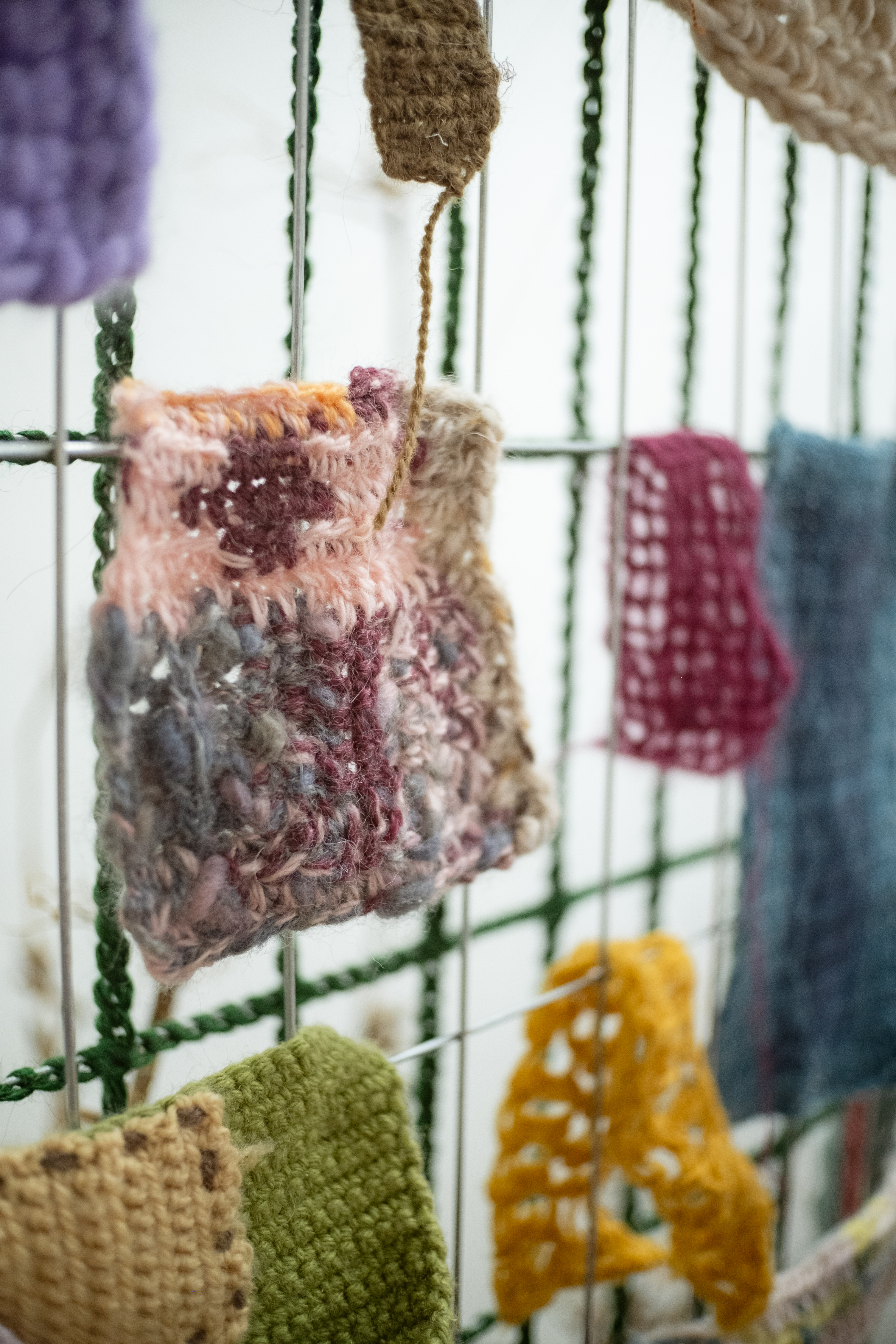
Craft has a way of offering many metaphors to life, such as threads of connection, having a yarn, and unwinding. The art of craft is powerful in its ability to connect. After the resurgence of crochet during the epidemic, my algorithms were flooded with creative possibilities for yarn. I learned how to crochet through YouTube tutorials in 2023, and since then, it has taken over my life. Crochet has acted as an archive of my relationships and experiences through moving to Tāmaki Makaurau from Kirikiriroa early in 2025. In my studio, I use two hurricane fences to hold my collection of yarn and crochet panels. The fences help to visualise the potential of new panels and what works well together, becoming a site for creative exchange.
Queer researcher, Daniel Fountain, in his essay, “Survival of the Knittest: Craft and Queer-Feminist Worldmaking” (2021) brings forward the similarities of craft and what it takes to survive as a queer person. Craft’s key overlapping element is its propensity to adaptability. With insufficient pockets in my outfits, the addition of a leather tool belt has enhanced the mobility of my practice. I deconstructed a leather bag from a dump shop and attached hardware to hold all my tools: my hooks are snug together in a woven sleeve, my scissors get their very own pocket, and my pouches hold the yarn of ongoing projects. Craft projects can often be transported easily and require a level of ingenuity, reflecting the skills required to navigate a stagnating heteronormative world. Alongside this, craft's association with women and domestic labour has made it undermined due to the misogyny within the art world. The undermining of craft as a skill contributes to narratives that express the queer experience of marginalisation.

While craft has a history of being undervalued, it has been invaluable in its reciprocity and changed how I navigate life. Endeavouring into the craft world has unlocked possibilities not just creatively but also in caring for those around me. The community and care-oriented nature of craft allows for an abundant nurturing of relationships. Keeping friends and family company while I methodically crochet, creates a calm space where the pressure to entertain one another is alleviated. We can keep comfortable silences, or talk about difficult strife. The fibres become a vessel for holding vulnerability. To survive within restrictive heteronormative, colonial, and capitalist structures, finding ways to care for one another becomes radical. Craft is a way of being that I carry with me every day. It holds memories of care, and has become a celebration of the relationships that ground me.


1 Daniel Fountain, “Survival of the Knittest: Craft and Queer-Feminist Worldmaking,” MAI: Feminism & Visual Culture, December 13, 2021, https://maifeminism.com/survival-of-the-knittest-craft-and-queer-feminist-worldmaking/.


Comments